Bushings & Hubs engineering guide
Interchangeability is a full-interface decision
Begin with what can be measured about taper-lock bushing. Use interchangeability and hub series to expose hidden incompatibility, then carry taper and fastener sequence into the service plan. Treat taper-lock bushing, interchangeability and hub series as separate compatibility gates. The preferred or interchangeable option is the one that preserves geometry, fastener function, service access and machine duty at the same time.
What to Consider
This article keeps taper-lock bushing, interchangeability, and hub series connected to taper and fastener sequence. Each is treated as an engineering input with its own evidence, not as a keyword that can stand in for the others.
Boundary for model-specific values
Do not turn a missing specification into an estimate. If taper or fastener sequence depends on the exact model, identify the model first and take the value from its controlled product data or machine documentation.
What must be known before the next step
- taper-lock bushing
- a taper-bushed shaft mounting component drawn into a matching taper hub by dedicated screws. Document the datum or source, then show how it affects interchangeability and whether hub series remains compatible.
- interchangeability
- a verified match of geometry, fastening, duty, material, and installation requirements between products. Treat the value as incomplete until hub series and taper have been checked on the same assembly.
- hub series
- the specific mating hub family whose taper and fastening geometry matches the bushing. Relate it directly to taper and fastener sequence; do not close the step from this variable alone.
- taper
- the mating conical geometry that draws the bushing and hub into contact. Use fastener sequence as the first cross-check and taper-lock bushing as the second before the result enters the RFQ or work order.
- fastener sequence
- the specified order and staging used to draw the taper in evenly. Pair the observation with taper-lock bushing; if interchangeability disagrees, preserve the discrepancy for engineering review.
Hub interchangeability requires more than a matching Taper-Lock series label
When considering a Taper-Lock bushing in a hub from another source, start with the controlled geometry. Verify series, taper, overall dimensions, screw-hole arrangement, bore and keyway, then check that the hub provides the same intended engagement and fastener function. A nominally equivalent series can still differ in details that affect screw length, material, balance or installation practice. Do not use visual fit or the ability to start the screws as proof that the interface is correct.
The safest interchange checklist keeps product and machine questions separate. Product questions cover dimensions, materials, fasteners and installation procedure. Machine questions cover torque, speed, shock, environment, axial location and future removal access. Both groups must pass. If any interface is uncertain, treat the parts as a proposed engineering substitution rather than a routine spare interchange.
Inspection Checklist
- Capture taper-lock bushing before disturbing the assembly.
- Cross-check interchangeability against hub series rather than treating either value alone.
- Keep any uncertainty around fastener sequence visible in the job record or RFQ.
Product context
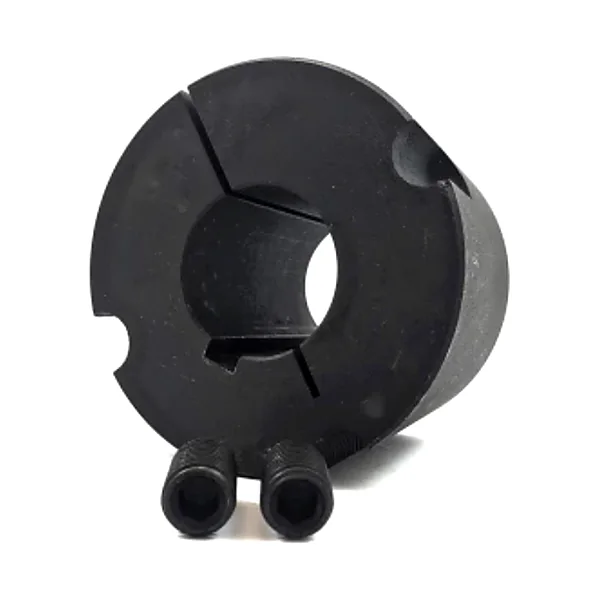
The on-site product context can be checked on the taper bushing series page while reviewing taper-lock bushing and fastener sequence; keep final acceptance tied to the exact part, shaft and controlled data.
Interchange requires an interface stack match
Approach hub series from the failure side: Partial interchange can cause bottomed screws, incorrect flange gap, lost key engagement, or taper contact only at one end. To avoid that mechanism, recheck torque procedure when the manufacturer changes. Then compare the result with taper rather than judging the surface in isolation.
A cross-reference number can be useful, but it does not remove the need to verify the machine interface. Manufacturers may use similar series names while differing in details or recommended installation practice. For this title, the practical close-out is to verify every mating interface, not only the bore. and document how fastener sequence supports the conclusion. The verified taper bore adapter options page provides product-family context for hub series; the exact drawing still governs acceptance.
Machine Checks
- Keep fasteners matched to the selected product. Relate this observation to taper.
- Use a current interchange document or compare controlled drawings line by line before approving the substitute. Relate this observation to fastener sequence.
- Keep the hub series finding traceable to taper. Relate this observation to taper-lock bushing.
Before You Order
The hub series entry should name its datum, inspection method, and the evidence used to reconcile taper with fastener sequence.
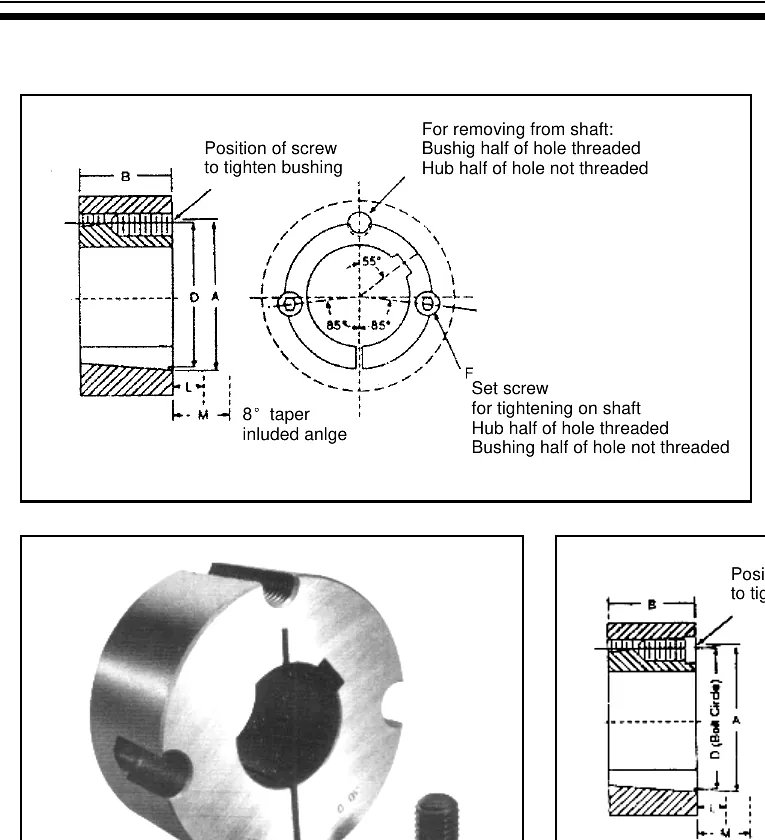
Selection Table: Check vs. Risk
| Interface | Evidence to collect | Why a mismatch matters |
|---|---|---|
| taper-lock bushing | Verify every mating interface, not only the bore. | Treat taper-lock bushing as a hard gate because an error here can make interchangeability misleading or nonfunctional in service. |
| interchangeability | Use the same datum for repeated depth measurements. | Do not average away a problem in interchangeability; it may be the reason hub series appears to fit on the bench but fails in service. |
| hub series | Recheck torque procedure when the manufacturer changes. | When hub series conflicts with the controlled data, stop before accepting taper as evidence of compatibility. |
| taper | Do not measure across visible damage if an intact reference exists. | If taper is wrong, a correct-looking fastener sequence cannot rescue the interface; the release decision must be reopened. |
| fastener sequence | Keep fasteners matched to the selected product. | A discrepancy in fastener sequence can invalidate the interpretation of taper-lock bushing, even when several other dimensions are close. |
| Release gate | Release only when taper-lock bushing, interchangeability, and hub series agree with the mating hardware and machine duty. | |
Use a repeatable measurement method, not a single spot check
Approach taper from the failure side: Measuring across a split, burr, paint ridge, or damaged flange can send the replacement search in the wrong direction. To avoid that mechanism, record uncertainty instead of rounding a doubtful value into a catalog size. Then compare the result with fastener sequence rather than judging the surface in isolation.
Wear, burrs, coating buildup, and deformation can make an old bushing measure differently depending on where the tool contacts. A repeatable method lets another person reproduce the result. For this title, the practical close-out is to do not measure across visible damage if an intact reference exists. and document how taper-lock bushing supports the conclusion.
Before You Order
The taper entry should name its datum, inspection method, and the evidence used to reconcile fastener sequence with taper-lock bushing.
Verification set
- Use the same datum for repeated depth measurements. Relate this observation to fastener sequence.
- Photograph the measurement setup and record tool resolution, reference points, and whether the dimension came from a worn or unworn surface. Relate this observation to taper-lock bushing.
- Keep the taper finding traceable to fastener sequence. Relate this observation to interchangeability.
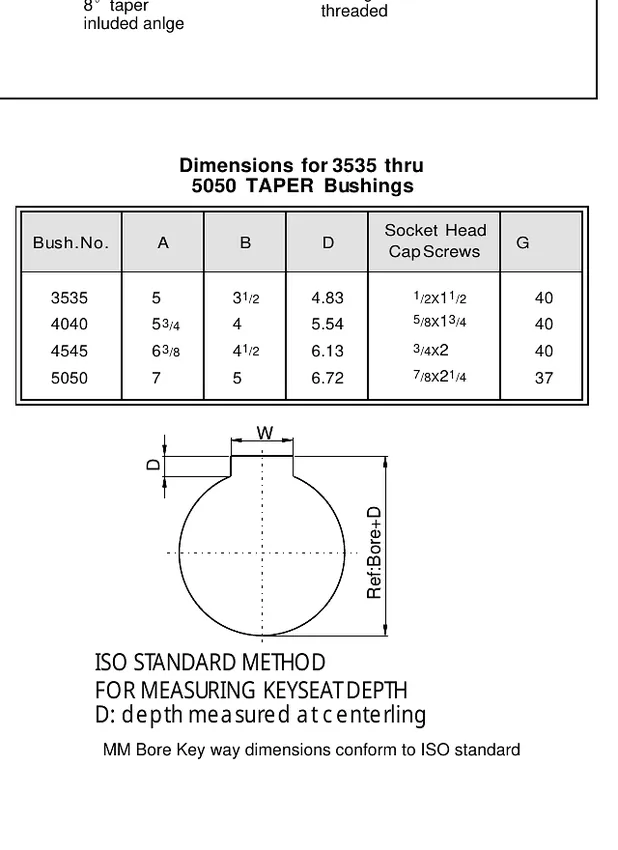
Prove interchangeability one interface at a time
Prove taper-lock bushing first, then interchangeability; do not let one matching dimension cancel a failure at the other. Continue through hub series, including the specific hub and fastener functions. Use taper as the installation gate and fastener sequence as the maintenance gate.
If the gates for taper-lock bushing, interchangeability, and hub series all pass, the candidates may be functionally comparable for the stated duty. If taper or fastener sequence fails, document the exact interface that blocks interchange. This discipline is especially important when a field-modified hub or rebored bushing makes the existing assembly look standard even though it no longer matches catalog geometry.
Related Product Options
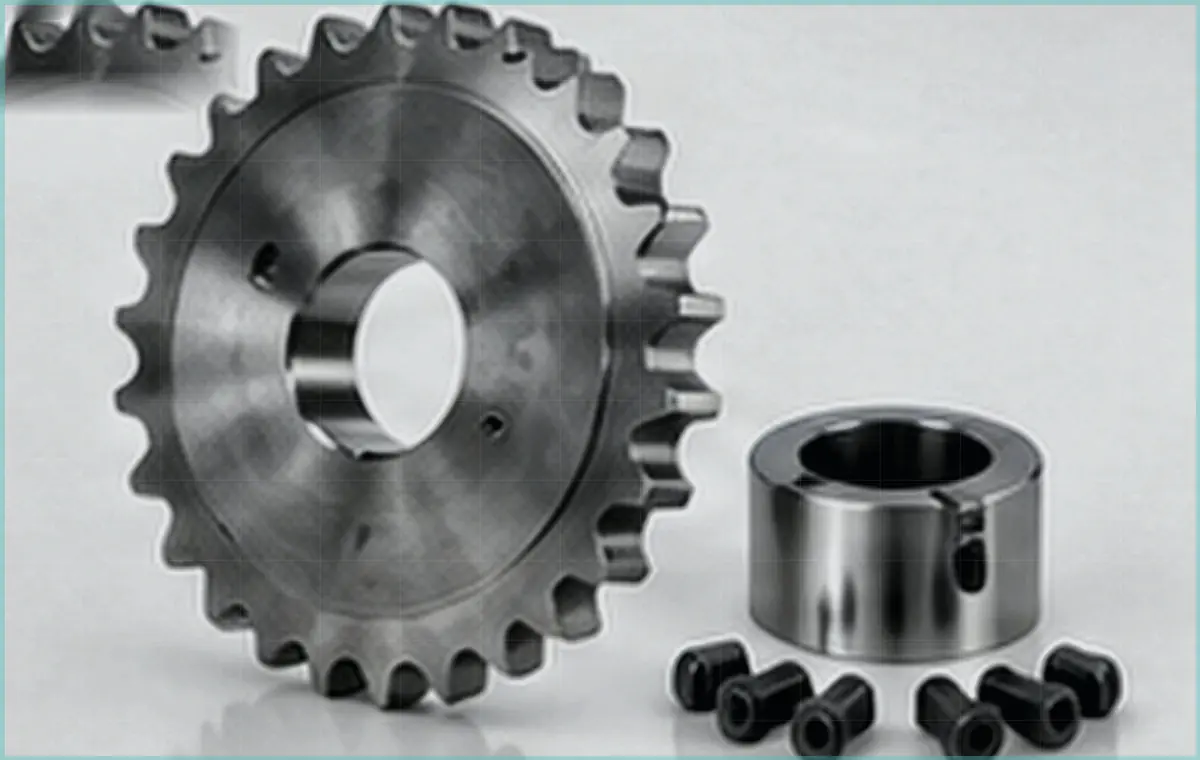
The verified taper bore weld-on hubs page supplies product context for interchangeability. Keep taper and fastener sequence tied to the machine record rather than inferring them from the page image.
Technical Reference
For model-specific instructions involving taper-lock bushing and fastener sequence, consult the industrial bushing product and nomenclature library that matches the selected family. Keep torque, hole functions, lubrication directions, and other controlled values with that product rather than transferring them across families.
Common verification questions
Is matching taper-lock bushing enough to prove interchangeability?
For taper-lock bushing, the working definition here is a taper-bushed shaft mounting component drawn into a matching taper hub by dedicated screws. Check it against interchangeability; then use hub series as an independent reason to accept or reject the result. If the two checks disagree, keep the part or purchase decision on hold until the discrepancy is explained.
What second interface should be checked after interchangeability?
Do not treat interchangeability as a yes/no visual check. It is a verified match of geometry, fastening, duty, material, and installation requirements between products. In this article, document hub series beside it and use the field observation “Use the same datum for repeated depth measurements” as a practical cross-check before release.
Can a near match in hub series be corrected during installation?
hub series matters because it is the specific mating hub family whose taper and fastening geometry matches the bushing. A reliable record names the datum, tool, or controlled document used and shows how the finding changes taper. Where fastener sequence is model-dependent, obtain that value from the exact product data rather than estimating it.
How should taper be verified between different manufacturers?
Use taper as one acceptance item, not as the whole specification: the mating conical geometry that draws the bushing and hub into contact. Pair it with fastener sequence, and if taper-lock bushing points to another family or another condition, resolve that conflict before reuse, ordering, or start-up.
What failure can appear when fastener sequence is mismatched?
The engineering question around fastener sequence is whether its observed or controlled condition is consistent with taper-lock bushing. Here, fastener sequence means the specified order and staging used to draw the taper in evenly. Preserve measurements or photos that let a later technician test the same conclusion against interchangeability, with hub series kept as a separate cross-check.
Have Measurements? Send Them for a Fit Check
For a useful inquiry, send information about taper-lock bushing, interchangeability, and hub series from the actual assembly. If taper or fastener sequence is uncertain, include the part marking, measurements, photos, or drawings you have rather than guessing. For taper, include the selected-series information; for fastener sequence, describe the actual machine condition or service constraint.