Product Description
Workshop View
Careful Working
Example of What We Do
Company Introduction
Q: Are you a factory or trading company ?
A: We are a factory specializing in custom plastic injection molding parts,together with rubber parts and after-treatment of CHINAMFG such as painting,printing ,assembly etc .
Q:What info do you need if I want to get a quote for a custom plastic part ?
A: 3D drawing in IGS/STEP/X-T format is preferred .Otherwise as long as other format can provide equivellent info ,it would be fine too ,such as CAD drawing with weight info provideded ,or samples sent to us for checking .
Also please state other related info such as what quantity you need,if there are any special requirements such as painting,printing,assembly etc .
Q:What material you can handle ?
A:We can make CHINAMFG in various kind of materials such as PC/PP/ABS/Nylon/PA6/PA66/TPE/PVC/PBT/Nylon with Glass Fiber/Polycarbonate with Glass Fiber/AS/PS/PMMA etc and subber parts in NBR/Silicone etc .
Q:I have a custom plastic part to make ,I have the design but I am not familar with injection so I am not sure if this part may shrink or not working with injection,can you advise ?
A:YES,we have an engineering team who is not only familar with part design but also familar with injection feasiblity ,once we receive the drawing ,we will check the feasiblity for injection and potential problems in the design.For example,if the part is designed with unnecessary plastic which will not only add cost but also cause sink parts at the surface of the part,we will feedback you before proceeding .
Q:What colors can you do with my plastic part?
A :We can make any color that is in Pantone and RAL color system .
Q:What’s your lead time for mold and for production ?
A:Usually we can send samples in 30-35 days from mold order . Production lead time is 2 to 8 weeks depending on order size .
Q:What’s the mold life gurantee ?
A:We provide lifetime gurantee .For example,usually a mold would start to age after like 500,000 shots ,but if quantity can reach this level ,we will make a new mold at our expense to keep the stable production going on . So you pay mold cost once and we will be responsible for all production from this model .
Q:Is mold our property after we pay it in full ?
A:Yes,mold is the customer’s property after the customer pays it in full .We only keep it well in house to serve the customer’s production needs . The mold won’t be changed unless with customer’s permission .We will not produce from this mold for any third party unless we have the customer’s permission .
Q:What’s your delivery terms ?
A:It’s EXW price for air shipment and FOB HangZhou for sea shipment .HangZhou is our nearest port as we are located in HangZhou ,we can also coordinate to ship to other ports or locations if needed with negotiable price .
| Shaping Mode: | Injection Mould |
|---|---|
| Surface Finish Process: | Polishing/Sand Blasting/Texturing |
| Mould Cavity: | Single or Mutlti Cavity |
| Plastic Material: | PC/PP/ABS/PVC/Nylon/Pet/PA6/Nylon/TPE |
| Process Combination Type: | Single Process or Multi Process |
| Application: | Car, Household Appliances, Furniture, Commodity, Electronic, Home Use, Hardware |
| Customization: |
Available
| Customized Request |
|---|
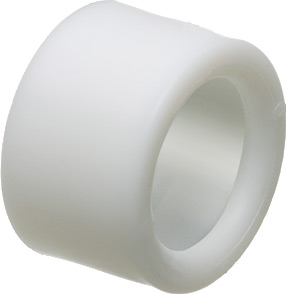
Where can I find online communities or forums discussing experiences with nylon bushings in specific applications?
If you are looking for online communities or forums where you can discuss experiences and gather information about nylon bushings in specific applications, here are some suggestions:
1. Engineering and Technical Forums:
– Websites dedicated to engineering and technical discussions often have dedicated sections or sub-forums where you can find discussions related to various mechanical components, including bushings. Examples of such forums include:
– Eng-Tips Forums (https://www.eng-tips.com/forums)
– Mechanical Engineering Forum (https://www.mechanicalengineeringforum.org/)
– Physics Forums (https://www.physicsforums.com/)
2. Industry-Specific Forums:
– Depending on the specific industry or application you are interested in, there may be specialized forums or online communities where professionals discuss their experiences with nylon bushings. These forums can provide valuable insights and application-specific information. Look for industry-specific forums or communities related to your field of interest.
3. Social Media Groups:
– Social media platforms such as Facebook, LinkedIn, and Reddit have groups or communities dedicated to engineering, mechanical components, or specific industries. Joining relevant groups and participating in discussions can provide you with a platform to connect with professionals, share experiences, and gather information about nylon bushings.
4. Manufacturer Websites and Forums:
– Some manufacturers or suppliers of nylon bushings may have their own forums or discussion boards on their websites. These platforms can be a valuable resource to connect with other users, ask questions, and share experiences specific to their products.
5. Online Professional Networks:
– Online professional networks such as LinkedIn can be a useful platform to connect with industry professionals, join relevant groups, and engage in discussions related to nylon bushings and specific applications. Participating in industry-related groups and networks can help you connect with experts and access valuable insights.
6. Online Technical Communities:
– There are online communities and platforms specifically dedicated to technical discussions and knowledge sharing. These communities often cover a wide range of topics, including mechanical components like bushings. Examples include Stack Exchange (https://stackexchange.com/) and Quora (https://www.quora.com/).
– You can search for relevant topics or ask specific questions related to nylon bushings to engage with knowledgeable individuals and benefit from their experiences.
Remember to review and abide by the rules and guidelines of each community or forum you join, and always be respectful and considerate when participating in discussions.
By exploring these online communities and forums, you can connect with like-minded individuals, share experiences, and gather valuable insights about nylon bushings in specific applications.
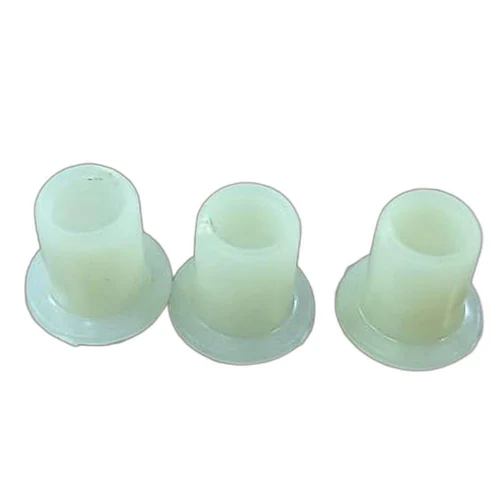
Are there specific guidelines for lubricating nylon bushings, and what lubricants are recommended?
If you are looking for specific guidelines on lubricating nylon bushings and recommendations for lubricants, here’s a detailed explanation:
1. Lubrication Guidelines for Nylon Bushings:
– Nylon bushings are often self-lubricating due to the inherent properties of the material. However, in certain applications or operating conditions, additional lubrication may be beneficial to reduce friction, wear, and noise.
– Before applying lubrication, assess the specific requirements of your application and consult the manufacturer’s recommendations or technical documentation for the nylon bushings. Some manufacturers may have specific guidelines or restrictions regarding lubrication.
– Consider the operating temperature range and environmental conditions of your application. High temperatures or harsh environments may require lubricants with specialized properties, while low temperatures may affect the viscosity and effectiveness of certain lubricants.
– Take into account the speed, load, and movement characteristics of the application. Higher speeds or heavier loads may necessitate the use of lubricants with higher viscosity or increased load-bearing capacity.
– Evaluate the potential for contamination or interaction with other substances in the application. Some lubricants may be incompatible with certain chemicals or materials present in the environment, leading to degradation or reduced performance of the nylon bushings.
2. Recommended Lubricants for Nylon Bushings:
– Dry Lubricants: Dry lubricants, such as PTFE (polytetrafluoroethylene) or graphite-based lubricants, are commonly recommended for nylon bushings. These lubricants create a thin film on the surface of the bushings, reducing friction and wear without attracting dust or contaminants.
– Silicone-Based Lubricants: Silicone-based lubricants are another option for nylon bushings. They provide good lubricity and can withstand a wide temperature range. Silicone lubricants are often used in applications where water resistance is required.
– Molybdenum Disulfide (MoS2) Lubricants: MoS2 lubricants are suitable for nylon bushings subjected to heavy loads or high pressures. These lubricants have excellent load-carrying capabilities and can withstand extreme conditions.
– PTFE-Based Lubricants: Lubricants containing PTFE particles or additives can provide enhanced lubrication for nylon bushings. PTFE helps reduce friction and wear, resulting in improved performance and extended service life.
– Synthetic Oils: Some synthetic oils, such as polyalphaolefin (PAO) or polyalkylene glycol (PAG) oils, can be used as lubricants for nylon bushings. These oils offer good lubricity and thermal stability.
– Avoid Petroleum-Based Lubricants: It is generally recommended to avoid petroleum-based lubricants, such as mineral oils or greases, as they can cause swelling or degradation of nylon materials.
– Follow Manufacturer Recommendations: Always refer to the manufacturer’s guidelines or technical documentation for specific lubricant recommendations. Manufacturers may provide their own branded lubricants or offer guidance on compatible lubricants for their nylon bushings.
– Proper Application: When applying lubricant to nylon bushings, follow the manufacturer’s instructions. Apply the lubricant sparingly and distribute it evenly across the bushing surface. Excessive lubrication can attract dust or contaminants, leading to potential issues.
– Regular Maintenance: Monitor the performance of the nylon bushings and reapply lubrication as needed. Regular inspection and maintenance can help identify any signs of wear or inadequate lubrication, allowing for timely intervention.
3. Consult with Manufacturers or Lubrication Experts:
– If you have specific concerns or unique operating conditions, it is advisable to consult with the manufacturer of the nylon bushings or seek advice from lubrication experts. They can provide tailored recommendations based on their expertise and knowledge of the specific application requirements.
– Manufacturers may offer technical support or have dedicated resources to assist customers with lubrication-related inquiries. Contact their customer service or technical support departments for guidance.
By following the lubrication guidelines provided by the manufacturer, selecting appropriate lubricants such as dry lubricants, silicone-based lubricants, MoS2 lubricants, PTFE-based lubricants, or synthetic oils, and consulting with experts when necessary, you can ensure proper lubrication of nylon bushings and optimize their performance in your application.
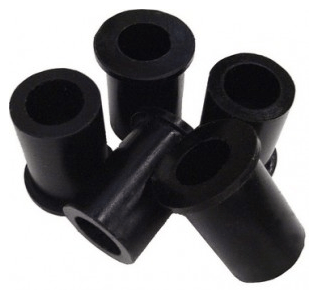
Can I get guidance on selecting nylon bushings based on factors like load capacity and speed?
If you are seeking guidance on selecting nylon bushings based on factors such as load capacity and speed, here’s a detailed explanation:
1. Load Capacity:
– Consider the maximum load or force that the nylon bushing will need to withstand in your application. This can be determined by analyzing the forces involved, such as static loads, dynamic loads, or impact loads.
– Check the manufacturer’s specifications or technical datasheets for the nylon bushings you are considering. Look for the maximum load capacity or load ratings provided by the manufacturer.
– Ensure that the selected nylon bushing has a load capacity that exceeds the expected loads in your application to ensure reliable performance and avoid premature failure.
2. Speed:
– Evaluate the speed at which the nylon bushing will operate in your application. Speed can impact the friction, heat generation, and wear characteristics of the bushing.
– Check the manufacturer’s specifications or technical datasheets for the maximum recommended speed or velocity for the nylon bushings. Exceeding the recommended speed can lead to increased friction, heat buildup, and accelerated wear.
– Consider the lubrication method for the bushing. Some nylon bushings may require additional lubrication to reduce friction and dissipate heat at higher speeds.
3. PV Value:
– The PV value is a measure of the pressure (P) and velocity (V) applied to the nylon bushing. It is calculated by multiplying the load or pressure per unit area by the sliding speed.
– Consult the manufacturer’s specifications or technical datasheets to determine the PV limits of the nylon bushings. Exceeding the recommended PV value can result in excessive wear, heat generation, and reduced performance.
4. Operating Conditions:
– Consider the operating conditions of your application, including temperature, humidity, and exposure to chemicals or environmental factors. These factors can influence the performance and durability of nylon bushings.
– Ensure that the selected nylon bushings are compatible with the specific operating conditions. For example, if your application involves high temperatures, look for heat-stabilized nylon bushings or alternative materials with higher temperature resistance.
5. Consult with Manufacturers or Suppliers:
– Reach out to manufacturers or suppliers specializing in nylon bushings. They can provide guidance on selecting the appropriate bushings based on your specific load capacity and speed requirements.
– Provide detailed information about your application, including the expected loads, speeds, operating conditions, and any other relevant factors. The manufacturer or supplier can assist you in choosing the most suitable nylon bushings for your needs.
By considering factors such as load capacity, speed, PV value, operating conditions, and seeking guidance from manufacturers or suppliers, you can make informed decisions when selecting nylon bushings that can effectively meet the performance requirements of your application.


editor by CX 2023-10-26