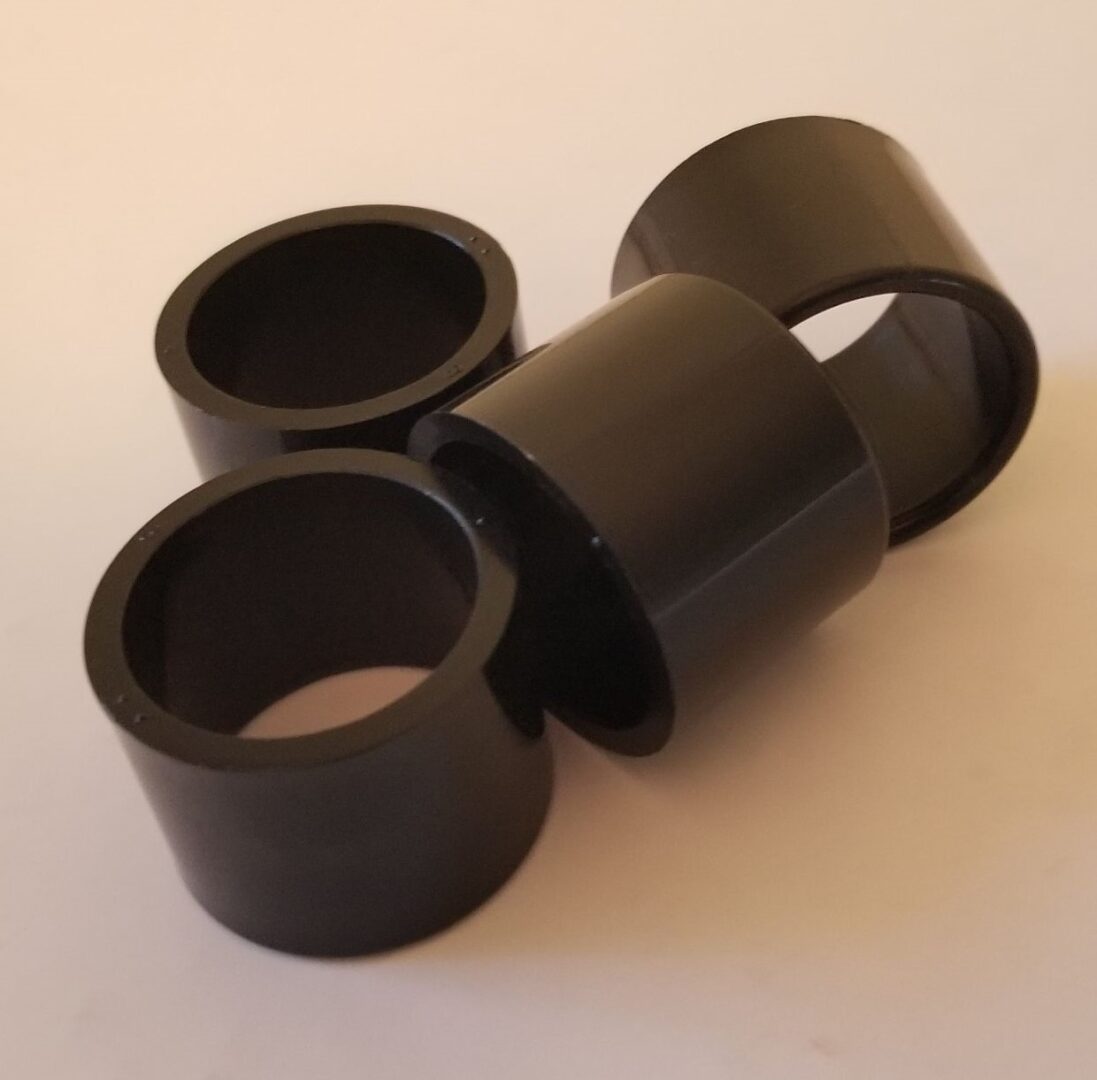
Can I get advice on choosing nylon bushings for noise reduction in machinery or equipment?
If you are seeking advice on choosing nylon bushings to reduce noise in machinery or equipment, here are some considerations and recommendations:
1. Material Selection:
– Start by selecting nylon bushings that are specifically designed for noise reduction. Some nylon formulations incorporate additives or fillers that help dampen vibrations and reduce noise generation.
– Look for bushings made from materials with good noise-dampening properties, such as nylon composites or reinforced nylon with additional sound-absorbing additives.
2. Self-Lubricating Properties:
– Self-lubricating nylon bushings can contribute to noise reduction by minimizing friction and reducing wear. When selecting bushings, consider those that offer built-in solid lubricants, such as PTFE or graphite, which provide smooth operation and help dampen noise caused by moving parts.
3. Fit and Clearance:
– Proper fit and clearance between the bushing and mating parts are crucial for noise reduction. Ensure that the bushing’s dimensions and tolerances are suitable for the application to minimize any potential noise caused by loose fits or excessive clearances.
– Consider bushings with precise dimensions and low coefficients of friction to reduce any rattling or vibration that may contribute to noise generation.
4. Vibration Damping:
– Nylon bushings can help dampen vibrations in machinery or equipment, which can be a significant source of noise. Look for bushings that have good vibration-damping properties, as this can contribute to overall noise reduction.
– Nylon bushings with internal or external ribs, designed to absorb and dampen vibrations, can be particularly effective in reducing noise caused by machinery or equipment operation.
5. Application-Specific Considerations:
– Consider the specific requirements and operating conditions of your machinery or equipment. Factors such as load, speed, temperature, and environmental conditions can influence the selection of nylon bushings for noise reduction.
– Consult with manufacturers, suppliers, or industry experts who specialize in noise reduction solutions for machinery or equipment. They can provide guidance on selecting the most suitable nylon bushings based on your specific application requirements.
Examples of Nylon Bushing Brands:
– Several brands offer nylon bushings designed for noise reduction in machinery or equipment. Here are a few examples:
1. Igus: Igus manufactures noise-dampening nylon bushings designed to reduce friction and minimize noise generation. Their bushings incorporate self-lubricating properties and are available in various configurations for different applications.
2. GGB Bearing Technology: GGB Bearing Technology offers noise-reducing nylon bushings suitable for machinery and equipment. Their bushings provide excellent vibration damping and can contribute to overall noise reduction in dynamic applications.
3. BNL Ltd.: BNL Ltd. produces nylon bushings with noise-reducing properties. Their bushings are designed to dampen vibrations and minimize noise generation in machinery and equipment.
4. Trelleborg Sealing Solutions: Trelleborg Sealing Solutions offers noise-dampening nylon bushings that provide reduced friction and noise levels. Their bushings are designed to absorb vibrations and contribute to noise reduction in various applications.
Remember to review the product specifications, performance characteristics, and compatibility with your specific machinery or equipment before making a final selection.
By considering the factors mentioned above and exploring reputable brands that specialize in noise-reducing nylon bushings, you can make an informed decision and choose bushings that effectively reduce noise in your machinery or equipment.
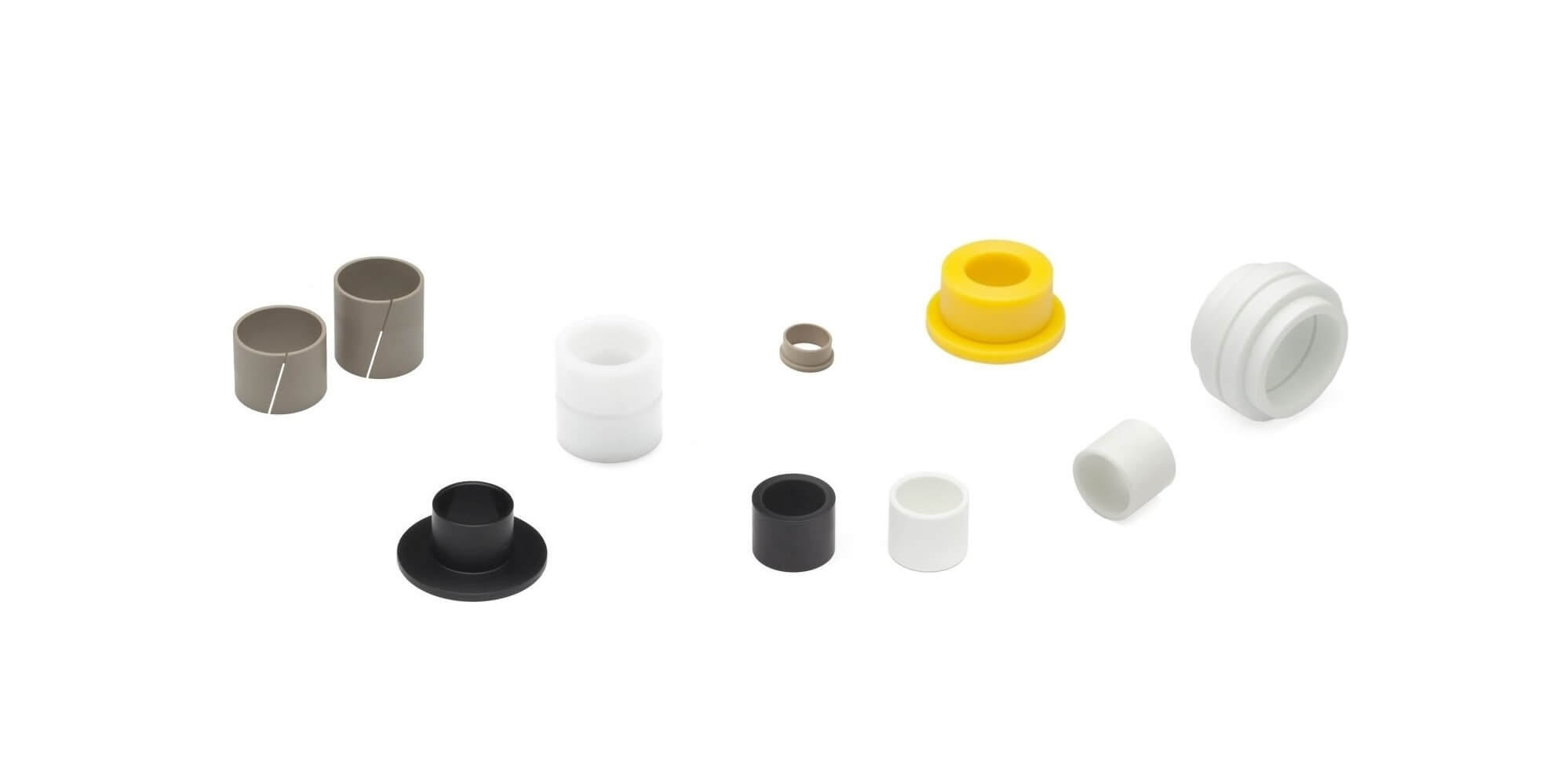
What are the common sizes and dimensions of nylon bushings, and how do I choose the right one for my application?
If you are wondering about the common sizes and dimensions of nylon bushings and how to choose the right one for your application, here’s a detailed explanation:
1. Common Sizes and Dimensions:
– Nylon bushings come in a variety of sizes and dimensions to accommodate different shaft diameters and housing bores. The specific sizes and dimensions can vary based on the manufacturer and the intended application.
– Common sizes for nylon bushings typically range from small diameters, such as 6 mm (0.24 inches), to larger diameters, such as 50 mm (1.97 inches) or more. The length or height of the bushings can also vary depending on the design and requirements.
– Nylon bushings may have standard metric or imperial sizes, and they are often categorized by their inner diameter (shaft size) and outer diameter (housing bore size).
2. Choosing the Right Nylon Bushing:
– Determine the shaft diameter and housing bore diameter of your application. These dimensions will help you select a nylon bushing with the appropriate inner and outer diameters.
– Consider the clearance or tolerance requirements for your application. Nylon bushings are available in different clearance fits, such as sliding fits or press fits, to accommodate specific clearance or interference requirements between the shaft and housing.
– Assess the load capacity and expected operating conditions of your application. Different nylon bushings may have varying load capacities and performance characteristics, so choose a bushing that can handle the anticipated loads and environmental factors.
– Take into account the specific requirements of your application, such as temperature resistance, chemical compatibility, or electrical insulation properties. Nylon bushings with additional features or modifications may be available to meet these specific needs.
– Consult the manufacturer’s specifications or technical documentation for the nylon bushings you are considering. This information will provide details on the recommended applications, load capacities, dimensions, and other relevant factors.
– If you are unsure about the selection process, reach out to the manufacturer or supplier for assistance. They can provide guidance based on your application requirements and help you choose the right nylon bushing.
It is important to note that selecting the right nylon bushing involves considering various factors, including size, dimensions, clearance, load capacity, operating conditions, and specific application requirements. By carefully assessing these factors and consulting with manufacturers or suppliers, you can choose a nylon bushing that is suitable for your application and ensures optimal performance and longevity.
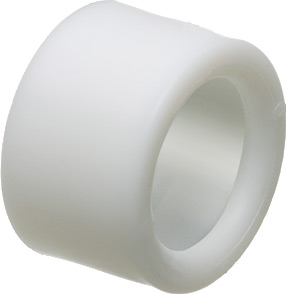
Are there different types of nylon materials used in manufacturing nylon bushings, and how do they impact performance?
Yes, there are different types of nylon materials used in manufacturing nylon bushings, and they can have varying impacts on performance. Here’s a detailed explanation:
1. Nylon 6:
– Nylon 6, also known as polyamide 6 (PA6), is a common type of nylon material used in manufacturing bushings. It offers good mechanical strength, toughness, and wear resistance.
– Nylon 6 bushings provide reliable performance in various applications, particularly those with moderate loads and operating conditions. They are cost-effective and widely available.
2. Nylon 66:
– Nylon 66, or polyamide 66 (PA66), is another popular nylon material used for bushing manufacturing. It has similar properties to Nylon 6 but with enhanced strength, stiffness, and heat resistance.
– Nylon 66 bushings exhibit improved dimensional stability and resistance to deformation under load, making them suitable for applications with higher loads or more demanding operating conditions.
3. Heat-Stabilized Nylon:
– Heat-stabilized nylon materials, such as Nylon 6/6 or PA66 with added heat stabilizers, are specifically formulated to provide increased resistance to elevated temperatures.
– These heat-stabilized nylon bushings can withstand higher temperature ranges without significant loss of mechanical properties or dimensional stability. They are suitable for applications where thermal resistance is a critical requirement.
4. Glass-Filled Nylon:
– Glass-filled nylon, also referred to as reinforced nylon, is a type of nylon material that is reinforced with glass fibers. The addition of glass fibers improves the strength, stiffness, and dimensional stability of the nylon.
– Glass-filled nylon bushings offer enhanced load-bearing capabilities, improved wear resistance, and reduced creep under heavy loads. They are commonly used in applications that require higher strength and rigidity.
5. Molybdenum Disulfide (MoS2) Filled Nylon:
– MoS2 is a solid lubricant that can be added to nylon materials to enhance their self-lubricating properties. Nylon bushings with MoS2 fillers provide improved friction and wear characteristics.
– MoS2-filled nylon bushings are suitable for applications where additional lubrication may be limited or impractical. They help reduce friction, minimize wear, and extend the lifespan of the bushing and mating parts.
6. Other Specialty Nylon Materials:
– There are various other specialty nylon materials available for specific applications. For example, nylon materials with enhanced chemical resistance, electrical conductivity, or low friction properties can be used in specialized bushing applications.
– These specialty nylon bushings cater to specific performance requirements and can be selected based on the unique needs of the application.
The choice of nylon material for manufacturing bushings depends on the specific application requirements, including load capacity, operating temperature, wear resistance, dimensional stability, and cost considerations. It is important to select the appropriate nylon material that can meet the performance demands of the application and ensure optimal functionality and durability of the bushings.


editor by CX 2024-05-14