Bushings & Hubs engineering guide
Use nomenclature to find geometry, then verify it
The fastest route to a wrong answer is to let QD frame code stand in for JA/SH/SDS families. This guide keeps SD/SK/SF families, E/F/J families, and M/N/P families visible until the decision is closed. Use QD frame code to locate the candidate series, then verify JA/SH/SDS families, SD/SK/SF families and the mating component from controlled dimensions. Nomenclature is a search key, not a substitute for physical verification.
What to Consider
This article keeps QD frame code, JA/SH/SDS families, and SD/SK/SF families connected to E/F/J families and M/N/P families. Each is treated as an engineering input with its own evidence, not as a keyword that can stand in for the others.
Boundary for model-specific values
Keep model-dependent numbers out of the comparison until the exact series is known. The working record should show which document governs E/F/J families and which drawing or instruction governs M/N/P families.
Build a Reliable Specification
- QD frame code
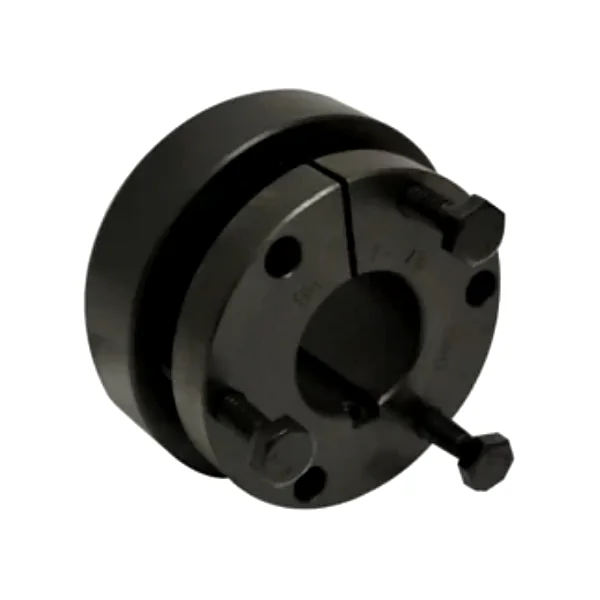
- a split flanged tapered bushing used with dedicated QD hub geometry. Use JA/SH/SDS families as the first cross-check and SD/SK/SF families as the second before the result enters the RFQ or work order.
- JA/SH/SDS families
- the observed or specified condition for JA/SH/SDS families that must be reconciled with SD/SK/SF families and E/F/J families. Pair the observation with SD/SK/SF families; if E/F/J families disagrees, preserve the discrepancy for engineering review.
- SD/SK/SF families
- an engineering input for SD/SK/SF families whose geometry, state, or requirement must agree with E/F/J families before M/N/P families is released. Document the datum or source, then show how it affects E/F/J families and whether M/N/P families remains compatible.
- E/F/J families
- the E/F/J families requirement carried by this machine; document its actual condition and its effect on M/N/P families and QD frame code. Treat the value as incomplete until M/N/P families and QD frame code have been checked on the same assembly.
- M/N/P families
- an engineering input for M/N/P families whose geometry, state, or requirement must agree with QD frame code before JA/SH/SDS families is released. Relate it directly to QD frame code and JA/SH/SDS families; do not close the step from this variable alone.
QD letters identify frame families that still need a bore and hub check
QD designations such as JA, SH, SDS, SD, SK, SF, E, F, J, M, N and P identify bushing frame families with different envelope and hub relationships. The letter is not the shaft diameter. When an old bushing is being replaced, record the complete marking, shaft bore, keyway and the mating hub or pulley identification. Then compare the flange diameter, length, screw arrangement and taper interface against the current family data. This prevents a common error: choosing a familiar QD letter from the shaft size while overlooking that the mounted component was built for a different frame.
The same discipline matters when a hub is fabricated or welded into a component. QD weld-on hubs are offered in frame-specific versions, so the hub reference and bushing family must be treated as a pair. Standard versus reverse mounting is another separate question that depends on hub design and axial space. A complete RFQ should therefore state the QD frame, bore, keyway, hub identity, mounting orientation if known and the measured shaft condition.
Inspection Checklist
- Capture QD frame code before disturbing the assembly.
- Cross-check JA/SH/SDS families against SD/SK/SF families rather than treating either value alone.
- Keep any uncertainty around M/N/P families visible in the job record or RFQ.
Product context
The on-site product context can be checked on the standard QD bushings page while reviewing QD frame code and M/N/P families; keep final acceptance tied to the exact part, shaft and controlled data.
Use a repeatable measurement method, not a single spot check
At the SD/SK/SF families interface, clean the part, identify unworn reference surfaces, choose micrometers, calipers, depth tools, gauges, or a surface plate as appropriate, and record at least two independent readings for each critical feature. For worn cylindrical features, check more than one angular position. In this article, compare that result with E/F/J families before accepting the observation.
Wear, burrs, coating buildup, and deformation can make an old bushing measure differently depending on where the tool contacts. A repeatable method lets another person reproduce the result. The release test for SD/SK/SF families is therefore tied to M/N/P families. Photograph the measurement setup and record tool resolution, reference points, and whether the dimension came from a worn or unworn surface. The verified QD weld-on hub range page provides product-family context for SD/SK/SF families; the exact drawing still governs acceptance.
Workshop Checks
- Do not measure across visible damage if an intact reference exists. Relate this observation to E/F/J families.
- Use the same datum for repeated depth measurements. Relate this observation to M/N/P families.
- Record uncertainty instead of rounding a doubtful value into a catalog size. Relate this observation to QD frame code.
What to Verify
The SD/SK/SF families entry should name its datum, inspection method, and the evidence used to reconcile E/F/J families with M/N/P families.
Selection Matrix
| Interface | Evidence to collect | Why a mismatch matters |
|---|---|---|
| QD frame code | Do not measure across visible damage if an intact reference exists. | Do not average away a problem in QD frame code; it may be the reason JA/SH/SDS families appears to fit on the bench but fails in service. |
| JA/SH/SDS families | Keep fasteners matched to the selected product. | When JA/SH/SDS families conflicts with the controlled data, stop before accepting SD/SK/SF families as evidence of compatibility. |
| SD/SK/SF families | Record uncertainty instead of rounding a doubtful value into a catalog size. | If SD/SK/SF families is wrong, a correct-looking E/F/J families cannot rescue the interface; the release decision must be reopened. |
| E/F/J families | Verify every mating interface, not only the bore. | A discrepancy in E/F/J families can invalidate the interpretation of M/N/P families, even when several other dimensions are close. |
| M/N/P families | Use the same datum for repeated depth measurements. | Treat M/N/P families as a hard gate because an error here can make QD frame code misleading or nonfunctional in service. |
| Release gate | Do not close the work order until JA/SH/SDS families, E/F/J families, and the mating component tell the same story. | |
Interchange requires an interface stack match
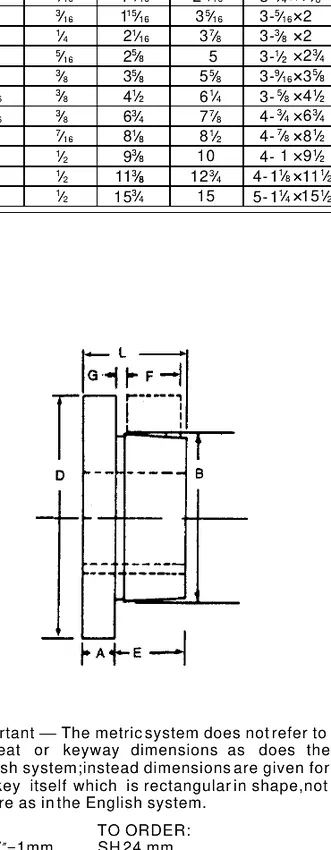
At the E/F/J families interface, compare bore, keyway, taper, overall and flange geometry, screw pattern, screw grade and length where specified, hub engagement, and any mounting orientation. Then verify the duty and material are acceptable for the application. In this article, compare that result with M/N/P families before accepting the observation.
A cross-reference number can be useful, but it does not remove the need to verify the machine interface. Manufacturers may use similar series names while differing in details or recommended installation practice. The release test for E/F/J families is therefore tied to QD frame code. Use a current interchange document or compare controlled drawings line by line before approving the substitute.
Selection Summary
The E/F/J families entry should name its datum, inspection method, and the evidence used to reconcile M/N/P families with QD frame code.
Inspection sequence
- Verify every mating interface, not only the bore. Relate this observation to M/N/P families.
- Keep fasteners matched to the selected product. Relate this observation to QD frame code.
- Recheck torque procedure when the manufacturer changes. Relate this observation to JA/SH/SDS families.
Decode the series in three independent checks
First read QD frame code exactly as marked. Second, compare JA/SH/SDS families with the corresponding family dimensions. Third, use SD/SK/SF families to test whether the mating hub belongs to the same system. This sequence prevents a partial code from becoming a complete but unsupported specification.
Confirm E/F/J families and M/N/P families after the candidate series is found. Record bore and keyway separately from the frame code. If the old part has an unusual bore or evidence of field machining, describe that modification explicitly rather than assuming the catalog number already includes it.
Related Product Options
The verified Bushings & Hubs product family page supplies product context for JA/SH/SDS families. Keep E/F/J families and M/N/P families tied to the machine record rather than inferring them from the page image.
Technical Reference
For model-specific instructions involving QD frame code and M/N/P families, consult the industrial bushing product and nomenclature library that matches the selected family. Keep torque, hole functions, lubrication directions, and other controlled values with that product rather than transferring them across families.

Common Questions
Does QD frame code identify the bore size by itself?
Use QD frame code as one acceptance item, not as the whole specification: a split flanged tapered bushing used with dedicated QD hub geometry. Pair it with JA/SH/SDS families, and if SD/SK/SF families points to another family or another condition, resolve that conflict before reuse, ordering, or start-up.
Where should JA/SH/SDS families be confirmed on an old assembly?
The engineering question around JA/SH/SDS families is whether its observed or controlled condition is consistent with SD/SK/SF families. Here, JA/SH/SDS families means the observed or specified condition for JA/SH/SDS families that must be reconciled with SD/SK/SF families and E/F/J families. Preserve measurements or photos that let a later technician test the same conclusion against E/F/J families, with M/N/P families kept as a separate cross-check.
Can two manufacturers use similar SD/SK/SF families markings differently?
For SD/SK/SF families, the working definition here is an engineering input for SD/SK/SF families whose geometry, state, or requirement must agree with E/F/J families before M/N/P families is released. Check it against E/F/J families; then use M/N/P families as an independent reason to accept or reject the result. If the two checks disagree, keep the part or purchase decision on hold until the discrepancy is explained.
What drawing feature should be checked with E/F/J families?
Do not treat E/F/J families as a yes/no visual check. It is the E/F/J families requirement carried by this machine; document its actual condition and its effect on M/N/P families and QD frame code. In this article, document M/N/P families beside it and use the field observation “Verify every mating interface, not only the bore” as a practical cross-check before release.
What should I record if M/N/P families is unreadable or missing?
M/N/P families matters because it is an engineering input for M/N/P families whose geometry, state, or requirement must agree with QD frame code before JA/SH/SDS families is released. A reliable record names the datum, tool, or controlled document used and shows how the finding changes QD frame code. Where JA/SH/SDS families is model-dependent, obtain that value from the exact product data rather than estimating it.
Have Measurements? Send Them for a Fit Check
When contacting us, include details for QD frame code, JA/SH/SDS families, and SD/SK/SF families from the actual hub and machine. Also include E/F/J families and M/N/P families when available, together with the selected series. If a model-specific number is needed for E/F/J families or M/N/P families, send the current instructions or series identification so we can avoid assumptions.