Bushings & Hubs engineering guide
Turn operating constraints into a mounting decision
The machine-side evidence for steel hub matters more than a familiar catalog photo, and split taper bushing must agree with hub series before a product family is released. Verify steel hub, split taper bushing and hub series, then check transmitted duty, environment and future service. The strongest selection is one another engineer can reproduce from measurements, drawings and the machine condition.
What to Consider
This article keeps steel hub, split taper bushing, and hub series connected to keyway and service access. Each is treated as an engineering input with its own evidence, not as a keyword that can stand in for the others.
Boundary for model-specific values
Where keyway or service access carries a numerical limit, mark it as “verify from exact product data” until the selected series is confirmed. That prevents a neighboring frame from supplying a plausible but wrong value.
What must be known before the next step
- steel hub
- the observed or specified condition for steel hub that must be reconciled with split taper bushing and hub series. Document the datum or source, then show how it affects split taper bushing and whether hub series remains compatible.
- split taper bushing
- a split, tapered shaft-mounting bushing used with a dedicated matching hub family. Treat the value as incomplete until hub series and keyway have been checked on the same assembly.
- hub series
- the specific mating hub family whose taper and fastening geometry matches the bushing. Relate it directly to keyway and service access; do not close the step from this variable alone.
- keyway
- the shaft-and-bushing groove system that locates the key and must match width, depth, and condition. Use service access as the first cross-check and steel hub as the second before the result enters the RFQ or work order.
- service access
- the physical space needed for installation, torqueing, alignment, and removal work. Pair the observation with steel hub; if split taper bushing disagrees, preserve the discrepancy for engineering review.
Select the steel hub and Split Taper bushing as one interface
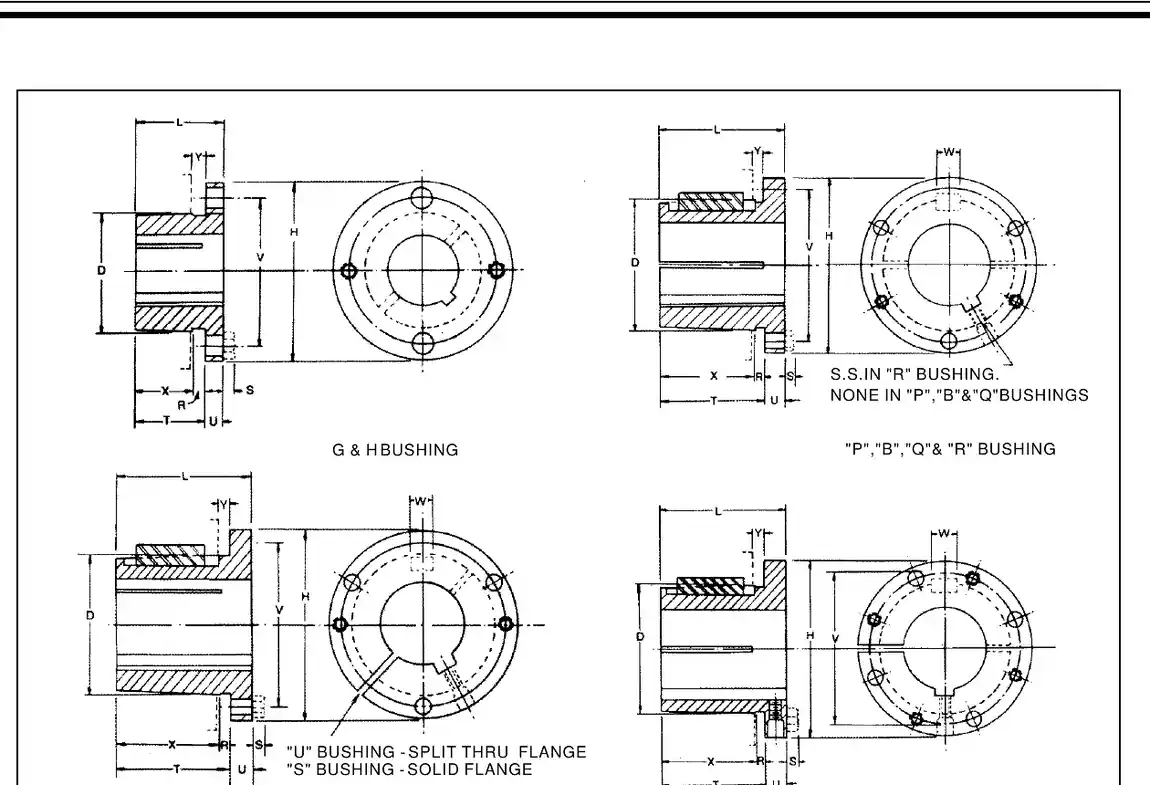
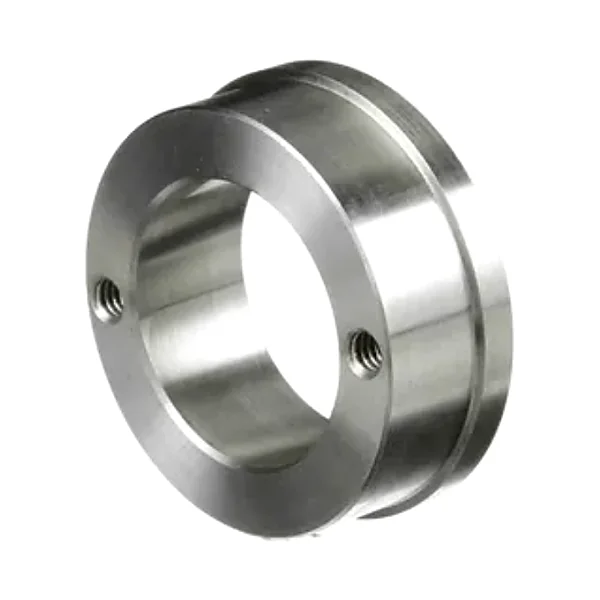
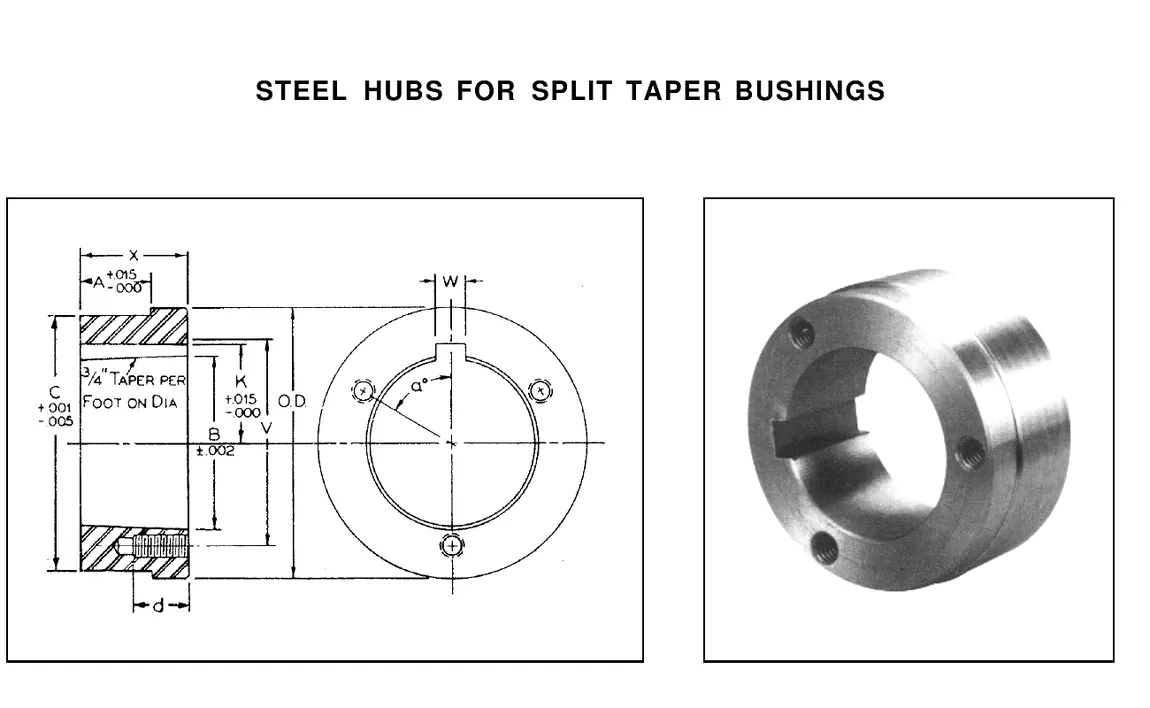
The hub must be designed for the exact Split Taper bushing family, including taper, flange form, fastener arrangement and available bore range. Start with the shaft and keyway, then identify the bushing series and choose the matching steel hub. Check the hub’s outside geometry against the pulley, sprocket or other component it will support, including axial space and any machining or welding planned around the hub.
Service access should be reviewed before release. The final assembly needs room for installation fasteners, torque tools and the future release method. If the hub will be welded or otherwise fabricated into a component, protect precision surfaces and inspect runout after the fabrication process. Do not treat a generic steel ring with a similar taper as an equivalent hub; the series geometry and fastener functions are part of the system.
Product context
The on-site product context can be checked on the split taper bushings page while reviewing steel hub and service access; keep final acceptance tied to the exact part, shaft and controlled data.
Three checks to keep
- Capture steel hub before disturbing the assembly.
- Cross-check split taper bushing against hub series rather than treating either value alone.
- Keep any uncertainty around service access visible in the job record or RFQ.
The mounted component changes what “correct” means
Approach hub series from the failure side: Selecting the bushing without the mounted-component context can produce a mechanically attachable part that still causes belt wear, chain tracking problems, vibration, or clearance conflict. To avoid that mechanism, record the component mass and duty when it affects service handling. Then compare the result with keyway rather than judging the surface in isolation.
The same shaft and bushing can support very different alignment and loading requirements. Belt drives are sensitive to sheave alignment, sprockets to chain alignment, and fans or impellers to balance and runout. For this title, the practical close-out is to reference the working pitch line or rim, not only the hub face. and document how service access supports the conclusion. The verified steel hubs for split taper bushings page provides product-family context for hub series; the exact drawing still governs acceptance.
Before You Order
The hub series entry should name its datum, inspection method, and the evidence used to reconcile keyway with service access.
Machine Checks
- Check guard and belt/chain clearance after axial positioning. Relate this observation to keyway.
- Include the mounted-component drawing or key dimensions in the selection review and define the final runout/alignment check before installation. Relate this observation to service access.
- Keep the hub series finding traceable to keyway. Relate this observation to steel hub.
Selection Table: Check vs. Risk
| Interface | Evidence to collect | Why a mismatch matters |
|---|---|---|
| steel hub | Reference the working pitch line or rim, not only the hub face. | A discrepancy in steel hub can invalidate the interpretation of split taper bushing, even when several other dimensions are close. |
| split taper bushing | Check whether the bushing can slide off the shaft after release. | Treat split taper bushing as a hard gate because an error here can make hub series misleading or nonfunctional in service. |
| hub series | Record the component mass and duty when it affects service handling. | Do not average away a problem in hub series; it may be the reason keyway appears to fit on the bench but fails in service. |
| keyway | Leave room for the specified wrench and removal screws. | When keyway conflicts with the controlled data, stop before accepting service access as evidence of compatibility. |
| service access | Check guard and belt/chain clearance after axial positioning. | If service access is wrong, a correct-looking steel hub cannot rescue the interface; the release decision must be reopened. |
| Release gate | Release only when steel hub, split taper bushing, and hub series agree with the mating hardware and machine duty. | |
Design for installation and removal access
At the keyway interface, check the space available for torque wrench swing, removal screws, pull direction, keys, guards, bearings, and adjacent structure. Sketch the maintenance envelope if access is tight. In this article, compare that result with service access before accepting the observation.
A mechanically suitable bushing can become a poor service choice if technicians cannot reach the installation or jacking holes without dismantling half the machine. The release test for keyway is therefore tied to steel hub. Run a removal-path review before finalizing the hub architecture, especially on welded assemblies where the hub cannot be repositioned later.
Verification set
- Leave room for the specified wrench and removal screws. Relate this observation to service access.
- Check whether the bushing can slide off the shaft after release. Relate this observation to steel hub.
- Consider guard and bearing removal time in the maintenance plan. Relate this observation to split taper bushing.
Before You Order
The keyway entry should name its datum, inspection method, and the evidence used to reconcile service access with steel hub.
Tie the product family to the real service environment
Define steel hub from the machine, verify split taper bushing at the shaft or hub, and use hub series to connect the two. Then describe contamination, temperature, starts, shock, and access constraints that can change the practical value of an otherwise compatible bushing.
Use keyway and service access as life-cycle checks. A technically correct part can still be a poor choice if removal requires destructive work or if the spare strategy creates easily confused families. Document those tradeoffs before the drawing or RFQ is released.
Related Product Options
The Bushings & Hubs product family page is a verified site destination for service access. Use it as product context while retaining the separate inspection record for steel hub and hub series.
Technical Reference
For model-specific instructions involving steel hub and service access, consult the industrial bushing family overview that matches the selected family. Keep torque, hole functions, lubrication directions, and other controlled values with that product rather than transferring them across families.

Common verification questions
Can steel hub alone determine the right choice?
Use steel hub as one acceptance item, not as the whole specification: the observed or specified condition for steel hub that must be reconciled with split taper bushing and hub series. Pair it with split taper bushing, and if hub series points to another family or another condition, resolve that conflict before reuse, ordering, or start-up.
What should I verify about split taper bushing before ordering?
The engineering question around split taper bushing is whether its observed or controlled condition is consistent with hub series. Here, split taper bushing means a split, tapered shaft-mounting bushing used with a dedicated matching hub family. Preserve measurements or photos that let a later technician test the same conclusion against keyway, with service access kept as a separate cross-check.
When does hub series become a reason to choose a different mounting system?
For hub series, the working definition here is the specific mating hub family whose taper and fastening geometry matches the bushing. Check it against keyway; then use service access as an independent reason to accept or reject the result. If the two checks disagree, keep the part or purchase decision on hold until the discrepancy is explained.
How should keyway be documented in an RFQ?
Do not treat keyway as a yes/no visual check. It is the shaft-and-bushing groove system that locates the key and must match width, depth, and condition. In this article, document service access beside it and use the field observation “Leave room for the specified wrench and removal screws” as a practical cross-check before release.
What mistake is most common when checking service access?
service access matters because it is the physical space needed for installation, torqueing, alignment, and removal work. A reliable record names the datum, tool, or controlled document used and shows how the finding changes steel hub. Where split taper bushing is model-dependent, obtain that value from the exact product data rather than estimating it.
Discuss Your Bushing & Hub Application
For help selecting the right component, send us steel hub, split taper bushing, and hub series together with the measurements, drawings, or product information you already have. Also include keyway and service access so we can understand the application and prepare a useful response. If a model-specific value is needed for keyway or service access, include the exact series or current product data rather than a value copied from another family.